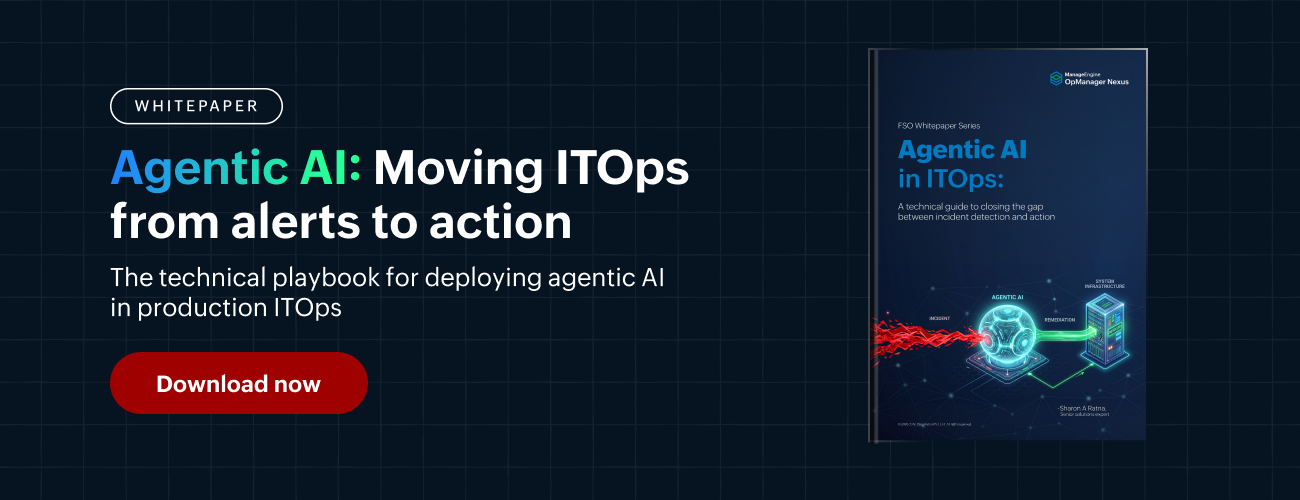
[White paper] Agentic AI in ITOps: Closing the gap between alerts and action
This challenge is only intensifying as IT environments grow more complex. Hybrid infrastructures, cloud-native applications, distributed systems, and ephemeral workloads make incidents harder to investigate, while fragmented tools, manual workflows, and cross-functional coordination continue to delay resolution efforts.
What sets agentic AI apart
Traditional AI in ITOps typically focuses on surfacing anomalies, correlating events, or generating recommendations. It helps teams understand what might be wrong, but human operators still need to investigate, decide, and act.
Agentic AI goes a step further. It can reason through incidents, plan next steps, and execute tasks within defined guardrails. In practice, that means AI agents can investigate alerts, correlate signals across tools, identify likely root causes, preserve operational context, and assist with remediation—helping teams move from alerts to action much faster.
Build your roadmap to agentic ITOps
Our latest white paper, Agentic AI in ITOps, answers these questions with a practical roadmap for adoption.
Inside, you'll discover:
The five levels of ITOps autonomy
Five high-impact use cases for agentic AI
The controls required for safe autonomy
A crawl-walk-run implementation framework
An ROI model for measuring business value
How to build an AI-ready observability foundation
Whether you're evaluating agentic AI or planning your journey toward autonomous IT operations, this white paper provides the strategies and frameworks to help you get started.
Topic Participants
Varsha.r