Office 365 mailbox delegation -2
Audit activities of mailbox delegates
O365 Manager Plus provides a default audit profile called Activities by Mailbox Delegates which provides one click access to the required audit data.
Note: Auditing must be enabled for mailboxes to view the audit log. Hence identify the auditing disabled mailboxes and enable mailbox auditing .
Steps to view the default audit profile
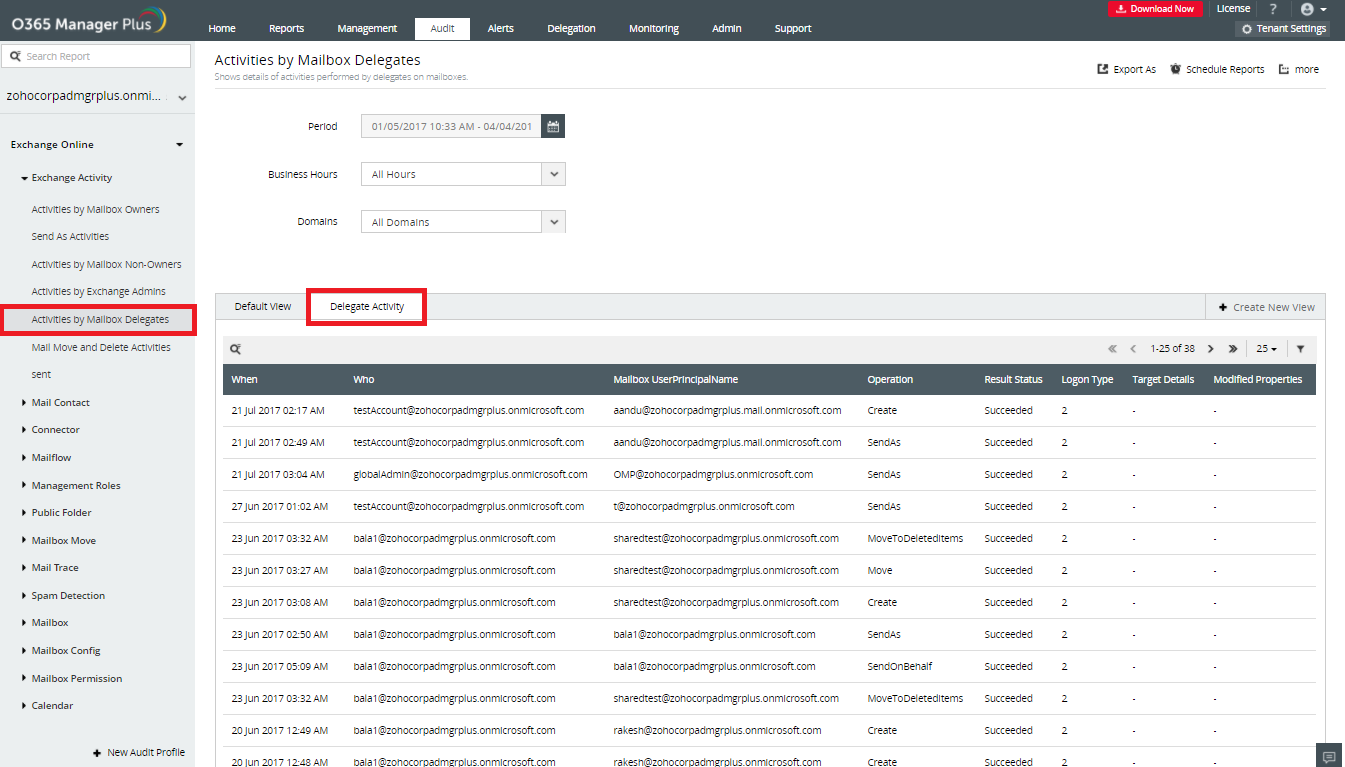
You can also create a new audit profile yourself using these steps.
Steps to create an audit profile
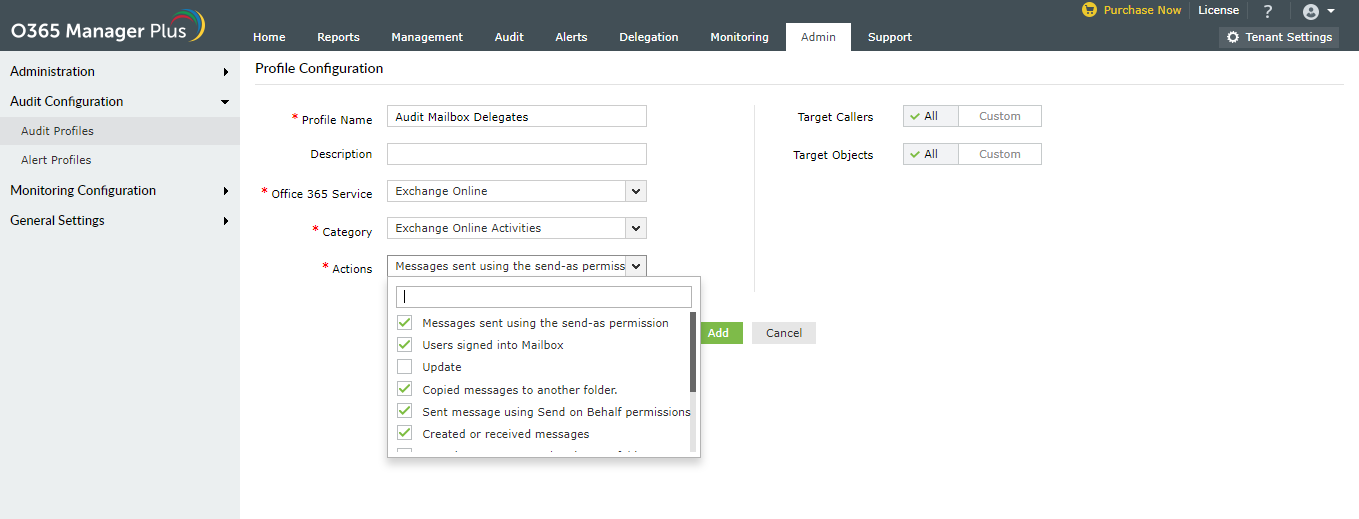
- Provide a profile name (Eg: Audit Mailbox delegates) and description of your choice.
- Choose Exchange Online from the Office 365 Service drop-down list.
- Choose Exchange Online Activities from the Category drop-down list.
- Select the actions that must be audited from the Actions drop-down list. Multiple actions can be selected.
- Select Target Callers (one who performs the action). You can either select All or click Custom to select users of your choice.
- Select the Target Objects (object on which the action must be performed). You can either select All or click Custom to select users of your choice.
- NOTE: Both Target Callers and Target Objects can either be users, groups or both.
- When you select custom users/groups for both Target Callers and Target Objects, you can select the desired Target Criteria, which is explained below.
- Click Add.
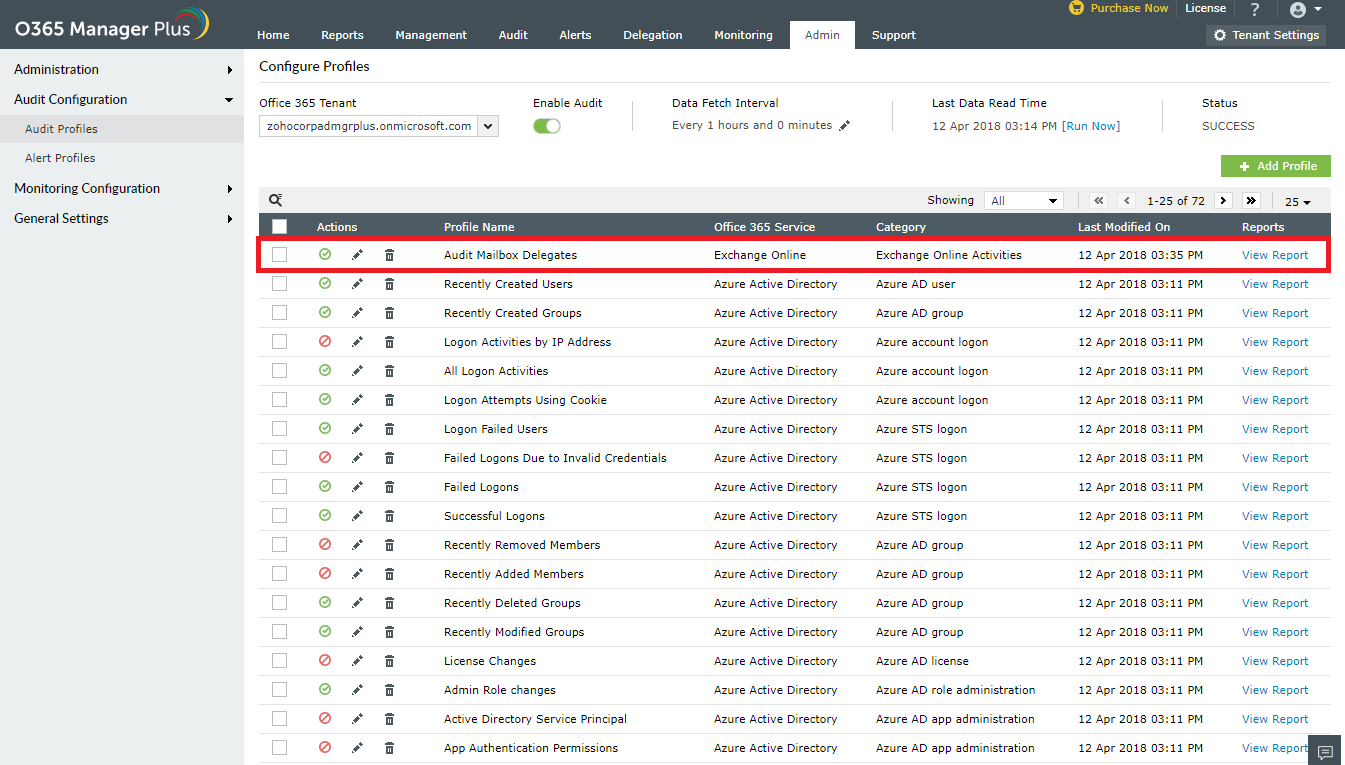
The profile you have created now, shows all the mailbox activities. To view the activities of delegates alone, you have to filter the data based on logon type. For delegates, the logon type value is 2. You can save this filter setting as a new view so that you don't have to configure the filter settings everytime.
Note: Target Criteria:
Callers AND Targets: The report will be generated when both the target and caller of the selected action matches with any of the selected targets and callers respectively.
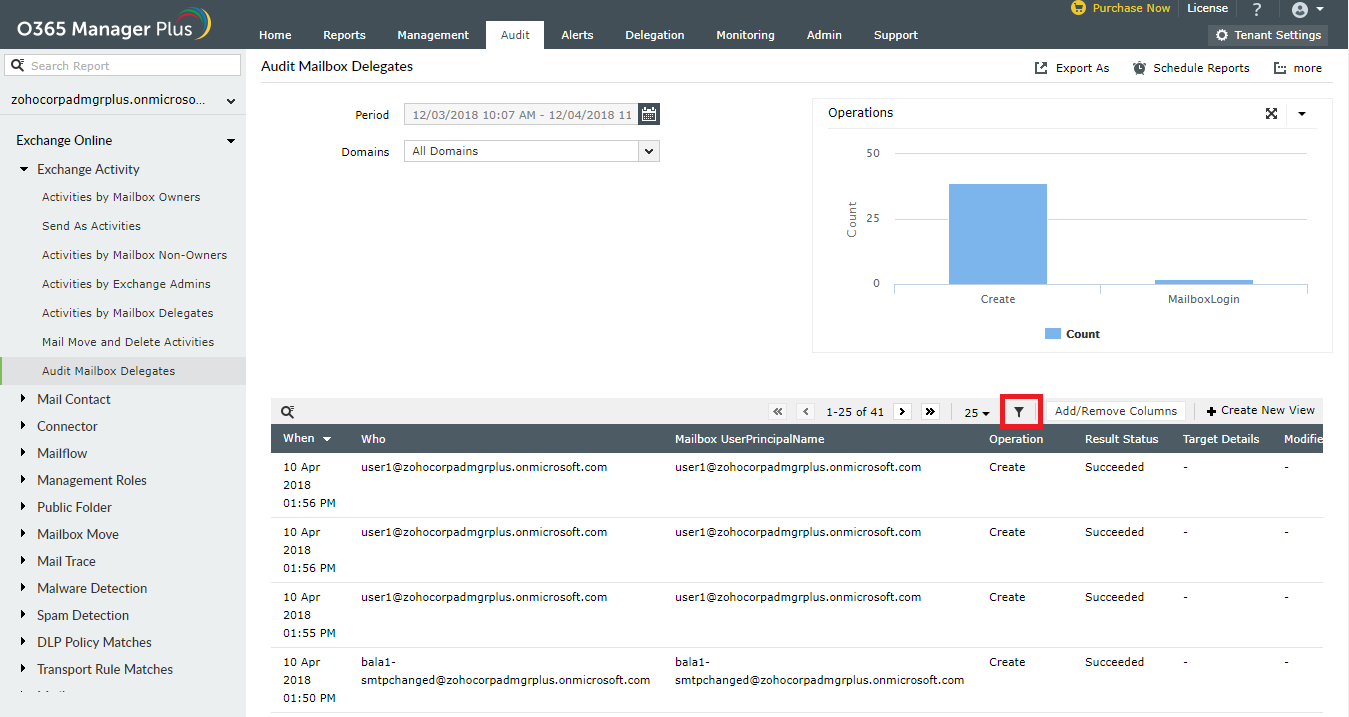
2. Configure the filter condition as shown in the image below.

3. Click Generate.

For more details on the feature offered by O365 Manager Plus, click here.
Sticky Posts
[KB] Manage Microsoft Teams with O365 Manager Plus
Just released earlier this year, Microsoft Teams a chat-based workspace in Office 365 is the latest collaboration tool from Microsoft. With Microsoft Teams, you can exchange messages and share files of any type. Though it may sound attractive, that file sharing feature turns ugly when highly confidential or malicious files are shared by accident or on purpose. In addition to Teams, third-party applications being integrated with Teams must also be monitored for obvious security reasons.Thankfully,[KB] Office 365 Auditing : 4 activities that you should never miss
Office 365 auditing is an effective way to get insights about user activities, and insider threats. Among the plethora of activities to be audited, there are four must-audit activities, that help you to identify the most common attacks like, brute-force attack, insider attack, elevation of privilege attack, etc. Below are those four important activities that must be audited: User accesses: Know who is accessing your Office 365 subscription, when, and from where. By establishing a baseline of normal[KB] Office 365 Group Membership Management
Groups are an easy way to send emails or assign permissions to users collectively. When new employees join your organization, all you have to do is add them to appropriate groups to grant them access to the required resources. Most of the time there will be multiple groups to which the new users must be added. But, the Office 365 portal does not have a provision to add users to multiple groups in one go. And, that's why you need a comprehensive Office 365 management solution that can fill in allOffice 365 mailbox delegation -2
In the previous post, we saw how to generate a report on Office 365 mailbox delegates and how to manage them in bulk easily with O365 Manager Plus. This week we will see how to audit the activities of mailbox delegates easily with O365 Manager Plus. Audit activities of mailbox delegates O365 Manager Plus provides a default audit profile called Activities by Mailbox Delegates which provides one click access to the required audit data. Note: Auditing must be enabled for mailboxes to view the audit[KB] Office 365 mailbox delegation - 1
In Exchange Online you can grant permission on any user's mailbox to other users to enable them to access the mailbox (the Full Access permission), or send email messages that appear to come from the mailbox (the Send As or Send on Behalf permissions). The users who are assigned these permissions on other mailboxes are called delegates. This article will explain how to grant permissions to users on other users' mailboxes, generate a report on all mailbox delegates. Reports on mailbox delegates O365